Maverick Director of ‘The French Connection’ and ‘The Exorcist’ was 87. by Jason F. Koenigsberg William Friedkin, a master of intensity and gritty realism in motion pictures has passed away. […]
Maverick Director of ‘The French Connection’ and ‘The Exorcist’ was 87.
by Jason F. Koenigsberg
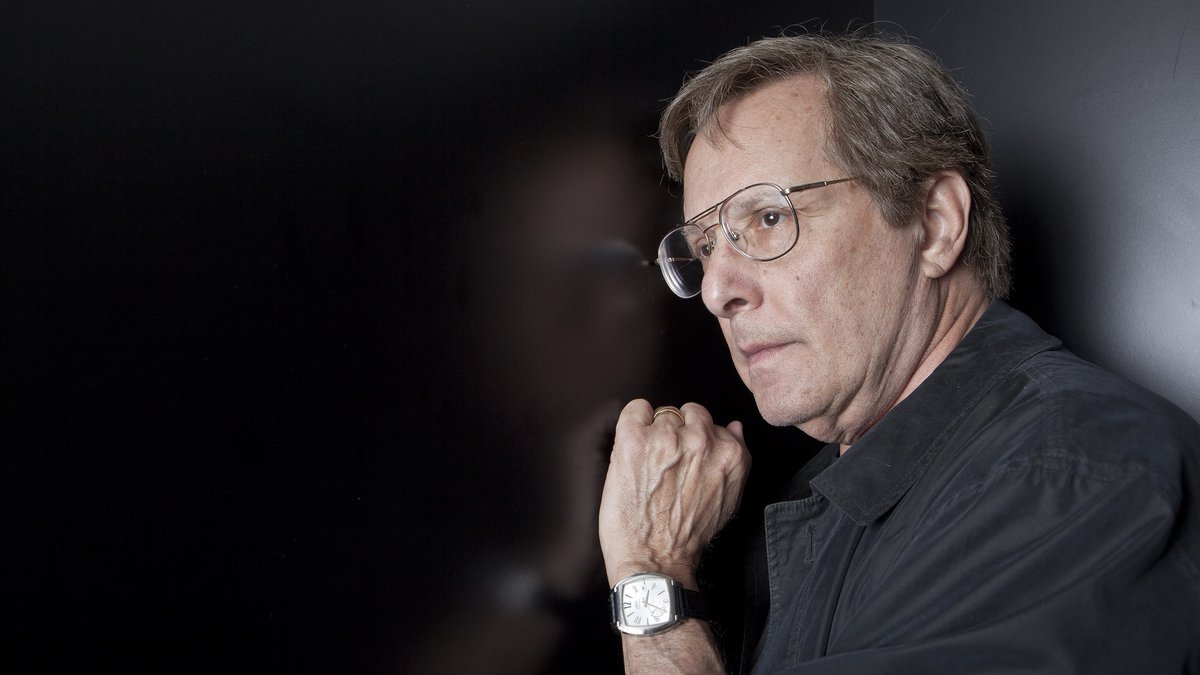
William Friedkin, a master of intensity and gritty realism in motion pictures has passed away. He was one of the leading figures of the “New Hollywood” movement of the 1970’s and solidified his place in history becoming one of the youngest directors to win the Best Director Academy Award for 1971’s The French Connection. That film also took home Oscars for Best Picture, Best Screenplay, and Best Actor for its then up and coming leading man Gene Hackman. He helped usher in a new era of filmmaking that changed movies forever and is responsible for some of the best moments in counterculture reflecting changes in American values on screen. Friedkin’s movies often courted controversy, tackling issues head on with no inhibitions and almost all of his films are filled with gripping moments of suspense that his hero Alfred Hitchcock would have been proud of. He was also very adept at spotting talent and utilizing then unknown or lesser known actors and giving them their breakout roles. Gene Hackman, Roy Scheider, Ellen Burstyn, Linda Blair, William Peterson, Willem Dafoe, Michael Shannon, and even Shaquille O’Neal may not have the acting careers they had without William Friedkin.
The French Connection was his first film that put him on the map and is arguably William Friedkin’s greatest achievement. It made a bonafide movie star out of Gene Hackman as well as featuring some of the best editing in the history of the medium. The car and subway chase in New York City was filmed for real and without any permits so it was very dangerous to say the least. The result is one of the best car chases of all time and is still considered the gold standard for what a chase scene should be. It also contains terrific performances from the aforementioned Hackman as well as Roy Scheider, who would also go on to bigger roles in movies like Chief Brody in Jaws (1975), as his partner, and Fernando Rey as the elusive drug dealer they are pursuing. Friedkin specialized in shooting on location as much as possible especially in The French Connection, so everything that is seen on screen was filmed on the actual New York City streets. It won Best Picture up against stiff competition from fellow nominees A Clockwork Orange, and The Last Picture Show, and was one of the highest grossing films at the box office that year.
He followed up The French Connection with another classic movie, The Exorcist (1973). Many film historians proclaim The Exorcist to be his best film and one of the best horror movies ever made. Both of these two films are loosely based on true stories, both filmed on location, and both boosted the careers of its talented actors, this time with Linda Blair and Ellen Burstyn. Friedkin even shot the opening scenes on location at an archaeological dig in Iraq. The Exorcist drew a lot of controversy from the Catholic Church and its graphic depictions of an innocent little girl possessed by the evil demon Pazuzu. But if anything the controversy worked and lines went around the corners of streets with people buying tickets to see The Exorcist which made even more money at the box office than TheFrench Connection. For years it was the highest grossing Rated-R film and the highest grossing horror movie. It earned even more Oscar nominations than The French Connection including another Best Director nomination for Friedkin. A major accomplishment for any horror movie to get that type of admiration from the Academy. However, The Exorcist did not fare as well on Oscar night with only William Peter Blatty taking home an Oscar for Best Screenplay. The following year Ellen Burstyn won Best Actress for Martin Scorsese’s Alice Doesn’t Live Here Anymore (1974). Many scholars point to this moment as the Academy making amends for overlooking Ms. Burstyn for her outstanding performance as a tormented mother forced to confront a supernatural horror taking over her daughter the previous year. William Friedkin was actually born Jewish to Russian immigrants but he changed his beliefs and stated that he believed in Jesus Christ after his experiences filming The Exorcist. Friedkin stated he witnessed things that could not be explained. The power of Christ compelled him!
William Friedkin continued to make motion pictures with high intensity but never quite matched the career highs from his one-two punch of The French Connection and The Exorcist in the early 1970s when Hollywood was transitioning from the old studio system to entrusting big budgets to visionary auteurs. His next film after The Exorcist was an exciting and intense thriller called Sorcerer (1977) starring Roy Scheider fresh after his huge turn in Jaws. Any other year it might have been a bigger hit but unfortunately it opened up at the same time as Star Wars did not fare well at the box office. Friedkin continued to crank out bold and thought provoking films but struggled to connect with audiences. He started off the 1980’s with theill-fated Cruising released only a few weeks into the decade and met with much controversy and outcry from Gay Rights groups. Cruising was not a critical or commercial success either. Years later it found an audience and today is an interesting relic of a New York City underworld that no longer exists predating the AIDS crisis by a few years. Cruising despite a brave performance from Al Pacino, tarnished his reputation since he was a method actor and was known to go great lengths to dive deep into the characters he played there were rumors abound that Al Pacino was gay. His voice changed during this time to be more high pitched and scratchy than the dominant vocals he displayed in his earlier films. His star power was already dwindling after a few underperforming films prior to Cruising and this movie did his box office appeal no favors. William Friedkin was also suffering diminishing returns and he famously butted heads a lot with Al Pacino on set. Even in recent years Friedkin was very outspoken about his disdain working with Al Pacino and there are videos of him on Youtube being interviewed where Friedkin states “I don’t give a flying f___ in a rolling donut what Al Pacino thinks!”
Nobody can ever say Friedkin minced words or was not perfectly clear about how he felt. Which is one of the main reasons why his autobiography ‘The Friedkin Connection’ is one of the most fascinating memoirs from a filmmaker who was there during the second rebirth of cinema. It is an outstanding primary source account and a must read for any fans of Friedkin’s movies or any movie lover for that matter. William Friedkin was one of the better loudmouth malcontents of his era and that quality is something we surely miss today.
After Cruising the rest of the 80’s did not fare much better for William Friedkin. The dark mature subject matter of his movies did not mesh well with what the general public wanted during the era when Spielberg, Lucas, and Zemeckis were dominating the box office. He tried to make a comedy with Chevy Chase and Sigourney Weaver called Deal of the Century (1983) which bombed. But then in 1985 he discovered an intense Chicago stage actor and signed him to make his motion picture debut to play the lead in his next movie. That actor was William Peterson and that movie was To Live and Die in L.A. (1985). Peterson would go to have a solid career in movies over the next few years but his biggest role would be on television in the CBS series CSI: Crime Scene Investigation. To Live and Die in L.A. is without a doubt one of Friedkin’s best movies. He captures the essence of L.A. in the 1980s.Even the criminal, played by a young Willem Dafoe who is great going head-to-head against William Peterson, is a struggling artist and uses his art to help him with his crimes as an expert counterfeiter. What master director William Friedkin did for the 70’s New York with The French Connection (1971) he duplicates with To Live and Die in L.A. for Los Angeles in the 80’s. The only problem was nobody saw it. A financial failure despite good reviews this is one William Friedkin movie that needs to be seen and put on the shelf next to his movies that received Academy Awards and nominations. Plus, it has a great soundtrack from Wang Chung.
The rest of the decade was fairly unkind to William Friedkin with no hits, mostly strike outs, some that never received wide North American releases. It was not until 1994 when he started to make some movies that the general public were exposed to. He made the basketball picture Blue Chips about a college coach played by Nick Nolte trying to recruit players for his university. Nolte is another big name method actor that Friedkin did not get along with and has interesting stories about. Blue Chips was a modest hit but is probably most famous for being the first movie to star then rookie NBA center Shaquille O’Neal. The following year William Friedkin directed the erotic thriller Jade which was a massive failure. This was him trying to do what he did for New York with The French Connection and for Los Angeles with To Live and Die in L.A. only this time it was cops and car chases throughout San Francisco. Much less people saw Jade than his previous two intense cop action thrillers and Jade received some of the worst reviews of his career with Gene Siskel calling it the worst movie of 1995 which is saying a lot considering that was the year of Showgirls, another colossal failure of an erotic thriller. Friedkin seemed unaffected by Jade stating that he was very proud of it and that he considers it to be one of the best movies he ever made. Reflecting on those three films now it seems like Jade had the opposite problem of To Live and Die in L.A. Instead of an actor nobody heard of in the lead who would eventually become a huge actor on TV, Jade starred David Caruso, an actor who was very popular from ABC’s NYPD Blue and spurned that show after one season to try and become a movie star. Perhaps it was that ego-driven move that rubbed audiences the wrong way and nobody came to see Jade or any David Caruso movies. It all came full circle when Caruso retreated back to television and found success again on the small screen in CSI: Miami. Jade is often looked at as the work of a has-been director and a star coasting on his bravado which is not entirely there.It deserves better than its reputation suggests and should be seen as an interesting picture in Friedkin’s filmography.
William Friedkin continued to direct movies. People often criticized that one of the man reasons he still had a career at this point was because he was married to Sherry Lansing, the former studio head of 20th Century Fox who was now the head of Paramount. Both Blue Chips and Jade were released by Paramount and William Friedkin’s next two thrillers would be distributed by Paramount as well. Neither was a massive hit like his glory days from the 70s but neither would be labeled a complete failure either. In 2000 he started off the new millennium with Rules of Engagement starring Tommy Lee Jones, Samuel L. Jackson, and Guy Pearce. An intense military thriller crossed with a heavy duty courtroom drama. He had the talented cast to deliver exactly what Rules of Engagement needed. It remains a solid picture for one seeking out something akin to A Few Good Men (1992). Friedkin’s next film reunited him with Tommy Lee Jones chasing down rogue military fugitive Benicio Del Toro in The Hunted (2003). This cat and mouse chase through the woods thriller is not as exciting as Rules of Engagement but the two Academy Award winning actors do the best they can with the material and Friedkin shows he can still direct intense action fight scenes in this Rambo knock off.
After that William Friedkin’s next two films would not only be his last films to finish before his passing, but also two of his most unique and with minimal budgets unlike the big movies he was making for Paramount the previous decade. Both Bug (2007) and Killer Joe (2012) were based on plays by Tracy Letts and both are dark, gritty, dialogue driven thrillers that are very against the grain.William Friedkin made his best film in a long time with the paranoia thriller/Iraq war allegory Bug. It was a claustrophobic horror-thriller about veterans dealing with PTSD and not trusting our government and gave Ashley Judd a chance to really show off her acting chops and a meaty role to then character actor Michael Shannon. After Bug he started to appear in much bigger roles and in much bigger budgeted productions. This movie really boosted his career to where he would eventually share scenes with Leonardo DiCaprio and Kate Winslet earning an Oscar nomination along the way for Revolutionary Road (2008) and play General Zod fighting Superman in Man of Steel (2013).
Killer Joe was a bigger production and pushed boundaries so much that it received the dreaded NC-17 rating. At this point William Friedkin probably did not care and made the movie he wanted to make regardless of how much money it might lose. Matthew McConaughey played the title role as both vile yet sympathetic. The audience rooted for him probably because the other characters were even more lost and depraved. This came out during the ‘McConaugh-sance’ where he had about a two year period of releasing outstanding work such as HBO’s True Detective, Scorsese’s The Wolf of Wall Street (2013) and culminating with his Academy Award for Best Actor in Dallas Buyers Club (2013). Killer Joe is one of McConaughey and Friedkin’s most controversial, subversive, and provocative works and also one of their most entertaining and outlandish pictures.
William Friedkin allegedly has a completed film called The Caine Mutiny Court Martial scheduled to be released later this year. That will no doubt be an interesting final chapter in a career of a maverick filmmaker who helped change Hollywood for the better. He had huge successes, massive failures, and a lot of in between hits and misses but he was always provocative and delivered what he wanted to make regardless of whether the masses would pay to see it or not. Friedkin was always outspoken even towards the end being a very vocal critic of modern motion pictures especially Marvel movies saying he could not get a picture made because they did not involve a guy wearing a cape or a mask. His work will always live on and true cine-files should see as many of his pictures to decide for themselves what he was trying to evoke and say about the times we were living in and all movie fans should seek out and read his terrific brutally honest memoirs.
Check out this tribute to William Friedkin when he won the 2021 Pan and Slam Legends Award


 Pan and Slam