by Jason F. Koenigsberg The Film Forum in New York City recently concluded their three-week 25-film retrospective on the career of Francis Ford Coppola. He is one of the most […]
by Jason F. Koenigsberg
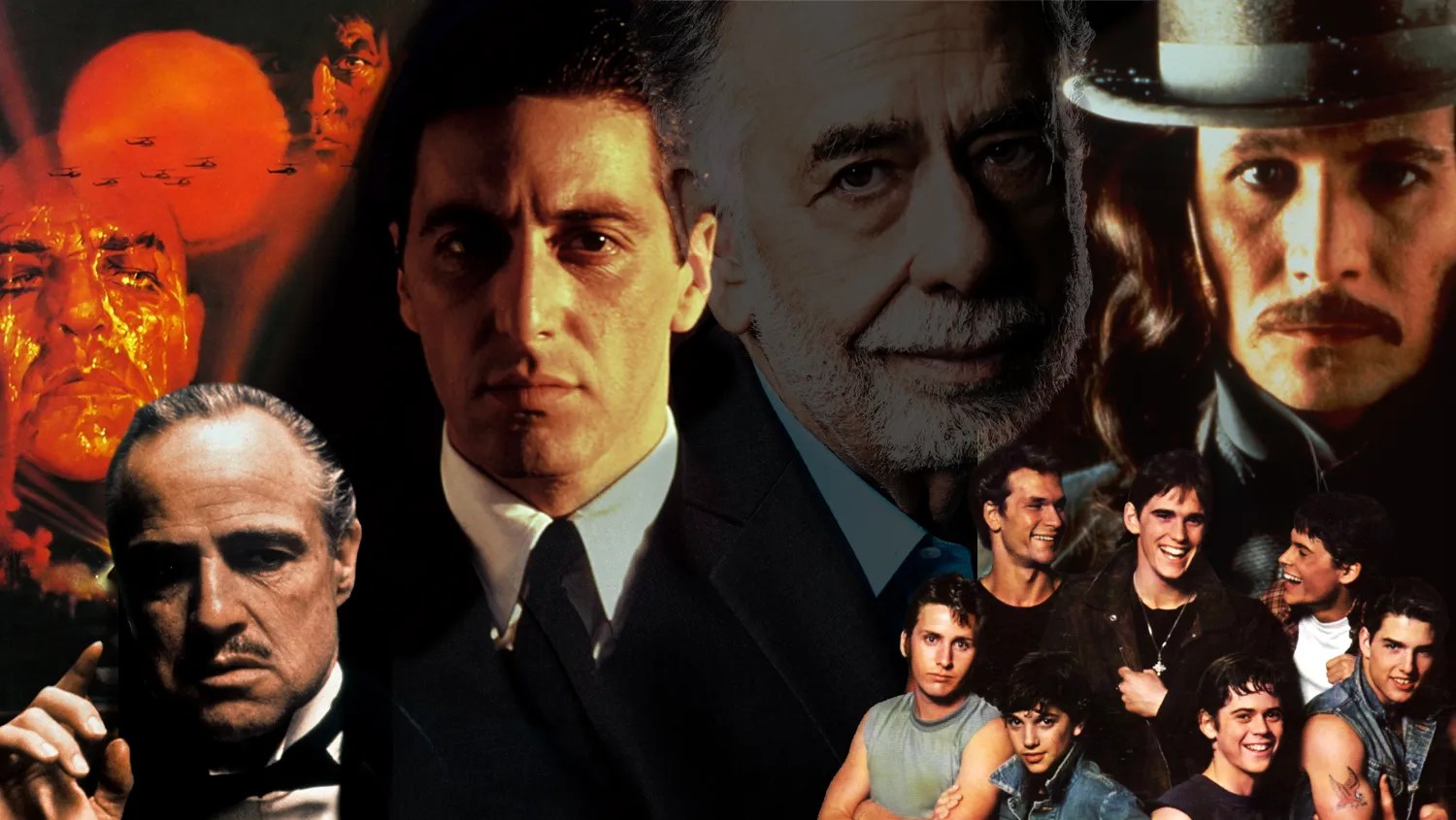
The Film Forum in New York City recently concluded their three-week 25-film retrospective on the career of Francis Ford Coppola. He is one of the most important voices of cinema of all time. People should not consider his career inconsistent but his great run throughout the 70s, is arguably the greatest run a director ever had. Many consider the 1970s to be the best decade of American cinema and if that is true, then Coppola was the best director of the most important era in American movie history, or he at least deserves consideration. Just think about what he accomplished in a seven year period, he directed The Godfather (1972), The Conversation (1974), TheGodfather Part II (1974), and Apocalypse Now (1979). All four of those films were nominated for the Academy Award for Best Picture, two in the same year. Both Godfather films won the top prize. Coppola won Best Director for the sequel. The Conversation and ApocalypseNow both won the Palm D’or, the equivalent of Best Picture at the prestigious Cannes Film Festival. Plus, throw in the fact that he also won an Academy Award for Best Screenplay for co-writing the script for Patton (1970) which also won the Best Picture Oscar, Coppola owned the 70s. One can argue that Steven Spielberg, George Lucas, or Sidney Lumet made better movies during that decade but it would be a lost cause. Francis Ford Coppola owned the 70s.
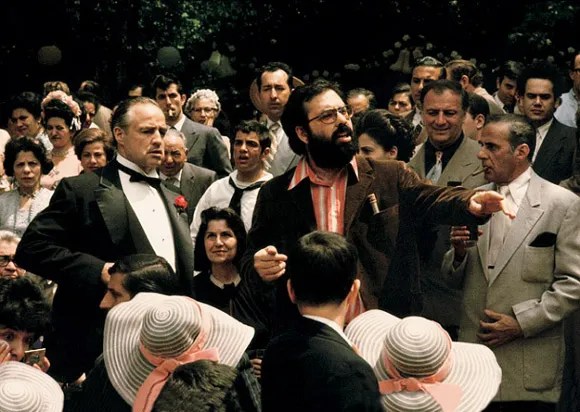
Francis Ford Coppola directs Marlon Brando in ‘The Godfather’
Before 1970 and after 1979, that is when you could argue other Coppola ascended from and slipped back into mediocrity. He became a mere mortal of the filmmaking world and not the icon he was directing classic after classic. In retrospect it is impossible for any director to maintain the glorious hot streak he had throughout the 70s. Many of his peers also struggled to duplicate the success they had after their breakout hits during that time and never fully recovered after their first big bomb at the box office. Ironically it was the movie the made right after the tumultuous production in the Philippines with Apocalypse Now where he relax and make a light hearted love story that ended up being Coppola’s biggest box office disaster and bankrupted him for nearly two decades.
Coppola’s career before The Godfather was not bad, but it certainly did not indicate that he was about to create some of the finest American movies ever made. Films such as Dementia 13 (1963), Finian’s Rainbow (1968), and The Rain People (1969) have their merits and their charms, but there is a reason they are not discussed nearly as often as the films Coppola would make over the next several years. He was trained in the school of Roger Corman. A protege of the low-budget director/producer and came up in the new Hollywood renaissance with his fellow film school alum. Coppola was older than Lucas, Spielberg, Scorsese, and most of the other directors who made their name in the New Hollywood era. For many of them, it was like a second gold rush: filmmakers were heading west and trying to find their fortunes in the movies.
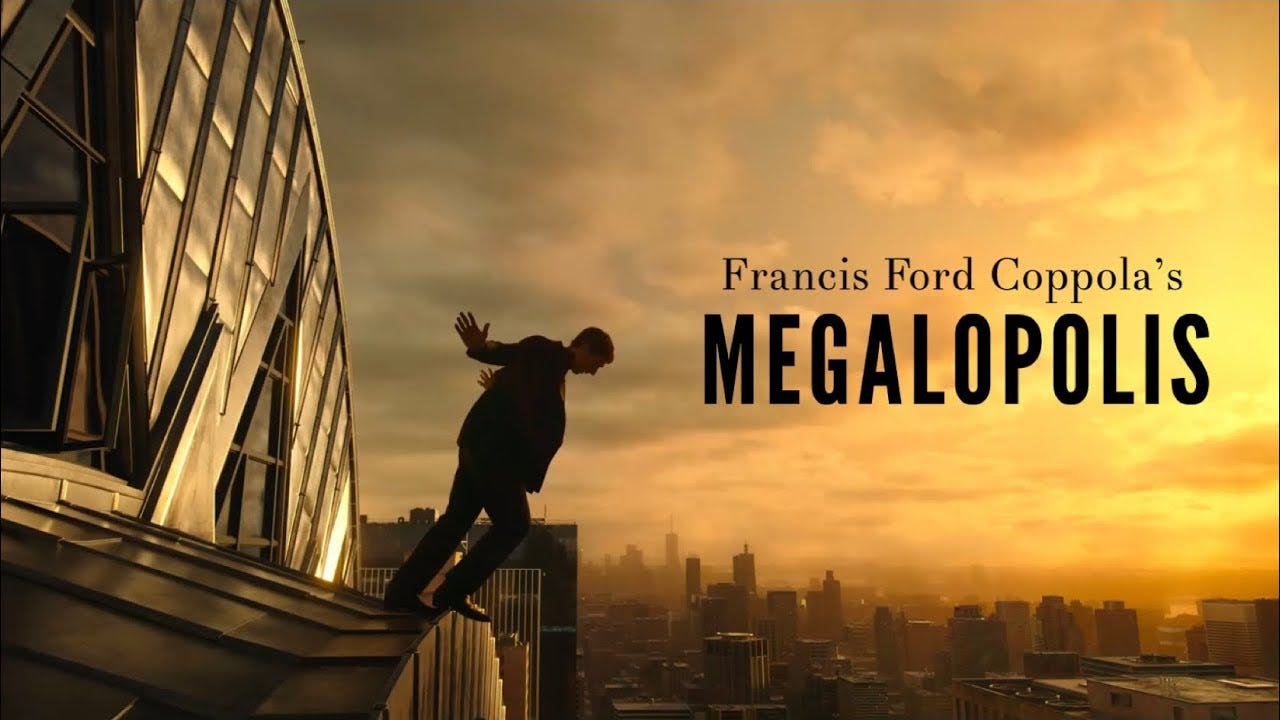
Coppola was also one of the first major directors of his generation to seriously challenge the traditional studio system. He released The Conversation through his own American Zoetrope production company rather than relying entirely on a traditional studio structure. Decades later, he would take an even more extreme approach with Megalopolis (2024), which he self-financed to the tune of roughly $120 million and which ultimately failed to recoup that investment at the box office.
Coppola has always wanted to make art and has often valued that above financial security or conventional marketability. During his prime, his artistic sensibilities were razor sharp.Even though The Conversation underperformed at the box office, critics and the Academy appreciated it and the audiences who did see it knew it was a special and topical paranoia thriller with one of the legendary Gene Hackman’s best performances. Megalopolis received far less enthusiastic notices, but, as I stated in my review, while the movie can be excruciating at times and suffers from a lack of pacing, there is something admirable about watching a singular artist pursue a completely personal vision. Fifty years after his Godfather heyday, that still counts for something.
1980s saw a major transition from the studios taking back the power from the auteurs they entrusted. The most notable turning point for this change was Michael Cimino’s follow up to his Oscar Winning Vietnam picture The Deer Hunter (1978) with his massive bomb Heaven’s Gate (1980) which sank its studio United Artists and forced them to merge with MGM. Coppola along with other directors such as William Friedkin, Peter Bogdanovich, and several others would be the casualties of this shift in culture with the studio heads reigning in the wild mavericks they set loose on the movie industry. Studios wanted to take back control. They could not trust these guys with massive budgets on just their instincts and instead wanted to make more people pleasing easier to digest hits that would guarantee a profit. Spielberg had created the mold of what a Hollywood blockbuster could be and they all wanted in on duplicating that formula. Coppola resisted as long as he could but after One From the Heart (1981) saw its budget balloon from $2 million to $25 million, and died at the box office making less than $1 million he had to stop financing his dreams and needed to start making movies to make money. So he started making movies to make money and earn a living. He has a big family with many famous relatives like his sister Talia Shire, his daughter Sofia Coppola, and his nephew Nicolas Cage whose real last name is Coppola. The latter two also have Academy Awards on their mantles.
Allegedly since One From the Heart bankrupted Coppola the rest of his movies he worked as a director for hire to get out of debt until The Rainmaker. He certainly is not as shrewd of a businessman as his colleague George Lucas. I am sure his Godfather royalties are sufficient to live on but some sources have stated that he makes more money off his wine sales than his movies. This could explain why there are so many different cuts released of Apocalypse Now and The Godfather Part III received a directors cut as well. Only for the money he made from that to go into Megalopolis with only earning $14 million back on its box office losing over $100 million for Coppola. He owns the rights and refuses to release it on home video or streaming saying that it was meant to be seen with an audience on a big screen. Kudos to Coppola for refusing to give in but his stubbornness may prevent him from earning some money and not allowing casual viewers a chance to see it. Time will tell if this is the last movie Francis Ford Coppola directs. Once again, give the man credit for having gumption. There is something admirable about refusing to compromise that vision, although that decision also limits the opportunity for casual viewers to discover the film on a streaming service.
Francis Ford Coppola has every right to be pompous and have a big ego after his tremendous run of success in the 70s, however it is important to note that he will often credit his authors in the title of his films and not himself. The opening seconds of his most famous film state Mario Puzo’s The Godfather, not Francis Ford Coppola’s. He did the same thing for S.E. Hinton’s The Outsiders, Bram Stoker’s Dracula, and John Grisham’s The Rainmaker. Few other directors consistently give the authors as much credit as Coppola has in his movies titles. After One From the Heart tanked his next few films garnered respectable reviews and box office. He made The Outsiders (1983) which introduced the world to some of the next generations biggest stars like Patrick Swayze, Ralph Macchio, and Tom Cruise. Then Rumble Fish (1983), and The Cotton Club (1984). He would direct the Michael Jackson space adventure Captain Eo (1986) in 3-D for Disney’s theme parks and followed that up with his most critically acclaimed film of the decade Peggy Sue Got Married (1986). It starred Kathleen Turner in a time-traveling baby boomer fantasy about a woman getting a chance to relive her youth and not make the same mistakes which led to her unhappy marriage. It plays like a more mature take on Back to the Future (1985) focusing on the human decisions we make and how we can change them.
He followed up his most acclaimed movie of the 80s with the solemn military drama Gardens of Stone (1987) which reunited him with James Caan who he had not worked with since a scene in The Godfather Part II. Nobody saw Gardens of Stone and it remains a forgotten curio in Coppola’s legacy only for his most ardent fans who want to see him direct Sonny Corleone again. The following year he released Tucker: The Man an His Dream (1988) with a terrific Jeff Bridges performance as an earnest car designer. It received great reviews and earned three Oscar nominations but failed to connect with audiences at the box office. His next effort was a short film collaborating with fellow New York based directors Woody Allen and Martin Scorsese on NewYork Stories (1989). Each filmmaker contributed a thirty to forty minute short. Sadly, there is no denying that Coppola’s entry, which appears in the middle of the film, is the weakest of the three. Roger Ebert described it best when he said New York Stories is three films, one good (Scorsese), one bad (Coppola), and one slightly disappointing (Allen).
With the decade coming to a close, Coppola wanted to put the 80s behind him and what better way to do that than to return to his biggest hit and being the Corleone crime family back together with The Godfather Part III (1990). His star Al Pacino also had a rough run during the 80’s with only the controversial Scarface (1983) being his lone bright spot of the decade. He probably wanted to go back to the familiar as well. Although The Godfather Part III is not well regarded today it did make a decent haul in ticket sales and earned Coppola his first Best Picture and Director nominations since Apocalypse Now. He was back on top and relevant in a way that he had not been in a while. He used that goodwill to make a visionary horror film based on one of the most famous scary novels of all time. In 1992 Francis Ford Coppola directed Bram Stoker’s Dracula featuring an all-star cast and an extraordinary visual design. The sets, costumes, makeup, cinematography, and stylized violence create a sumptuous feast for the eyes. Gary Oldman and Anthony Hopkins excel as Count Dracula and Van Helsing respectively although the less said about Keanu Reeves and Winona Ryder the better.
He would not direct another film for four years and when he did, oddly enough it was a run-of-the-mill Robin Williams comedy Jack (1996) which does not feel like an artistic vision as most of Coppola’s movies do but feels more like he wanted to make a studio comedy and earn some quick cash. The following year he directed John Grisham’s The Rainmaker (1997) which came out a few months before Good Will Hunting made Matt Damon a major movie star, and The Rainmaker is a solid courtroom drama. It is one of the last good movies based on a John Grisham novel and for what it is worth, the last time Coppola made a movie that really felt special and consequential. His next films Youth Without Youth (2007), Tetro (2009), and Twixt (2011) were all low budget poorly reviewed indie films that barely made an impact in his career or anyone else’s. It was not until Megalopolis that Francis Ford Coppola’s name attached to a project actually mattered again for the first time in a very long time. Acclaimed director Mike Figgis had exclusive behind the scenes access while Coppola made Megalopolis and he directed a making of documentary called Megadoc (2025) a very interesting companion piece to the feature film.
So there is Francis Ford Coppola in a nutshell. Mediocre at the start but not bad to eventually creating some of the most transformative motion pictures of all time. Two of the greatest mafia movies ever made, one of the best slow-burn voyeuristic thrillers of his era, and arguably the best war film of all time. If all he made were The Godfather, The Godfather Part II, The Conversation and ApocalypseNow his place in Hollywood immortality would be secure. But he gave us very interesting failures with One From the Heart and Megalopolis which really do need to be seen to be believed. He also gave us a wonderful fantasy comedy with Peggy Sue Got Married and the smart legal drama The Rainmaker, neither of which get talked about enough today. His take on Dracula is a unique vision that a lot of people still admire. Plus, maybe some of his other lesser films deserve to be rediscovered as well. Francis Ford Coppola has always given his all while making his pictures. All his money and all his health have been sacrificed for his vision. He is a true cinematic artist and his work will continue to be remembered and cherished for all time.


 Pan and Slam